
Manta Ray
Mobula alfredi
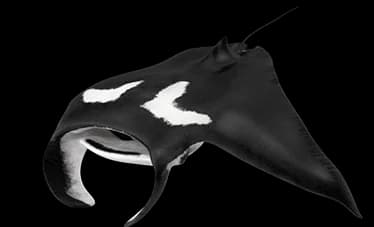
The reef manta ray is a member of the family Mobulidae and ranks among the largest rays on Earth. Of the generally accepted species it is the third largest, exceeded only by the giant oceanic manta and the Atlantic manta.
Family
Mobulidae
Avg Size
300-450 cm
Habitat
It is widely spread through tropical and subtropical parts of the Indo-Pacific, with a handful of records from the warm eastern Atlantic but none from the western Atlantic or eastern Pacific. It can be seen in many popular destinations, including Hawaii, Fiji, French Polynesia, Micronesia, Bali, Komodo, the Maldives, Mozambique, Australia and the Philippines. Mainly a coastal animal, it stays fairly settled, keeping to set cleaning and feeding areas near coasts, reefs or islands and making only short movements to follow zooplankton.
Behaviour
The reef manta lives a pelagic life, feeding by filtering seawater to capture zooplankton. Research suggests it can live at least 50 years, and like the oceanic manta it has the largest brain, both in weight and relative to body size, of any cold-blooded fish. Some populations form social communities, and off New Caledonia individuals have been recorded diving to 672 m in search of food, helped by countercurrent heat-exchange structures (rete mirabile) in the pectoral fins that may let them cope with the cold depths. Like the oceanic manta, it is ovoviviparous.
Where & When to See It
Thomas Reef
The Islands
Tower
Turtle Bay
White Knight
Woodhouse Reef
Fury Shoals
Little Brother Island
Numidia
Pinky Wall
Ras Nasrani
Temple
Three Pools
Ras Abu Helal
Abu Dabbab
Aida
Amphoras
Big Brother Island
Blue Hole - El Bells
Eel Garden
Eel Gardens
Elphinstone
Fiddle Garden
Gordon Reef
Habili Ali
Jackfish Alley
Jackson Reef
Kormoran
Laguna Reef
Lighthouse
Middle Garden
Moray Garden - Golden Blocks
Napoleon Reef
North Gabr El Bint
Paradise
Ras Burg
Ras Ghamila
Ras Ghozlani
Ras Katy
Ras Um Sid
Ras Zaatar
Sha'ab Samadai (Dolphin House)
Shark & Yolanda Reef
Shark Observatory
Shark's Bay
The Alternatives
The Canyon
The Caves
Shaab Maksur
Ras Bob
Far Garden
Panorama Reef
Near Garden
Daedalus Reef
Sodfa
El Fanadir
Shaab Claudia
Shaab El Erg
Shaab Sataya
Abu Nuhas
North Ras Abu Galum