
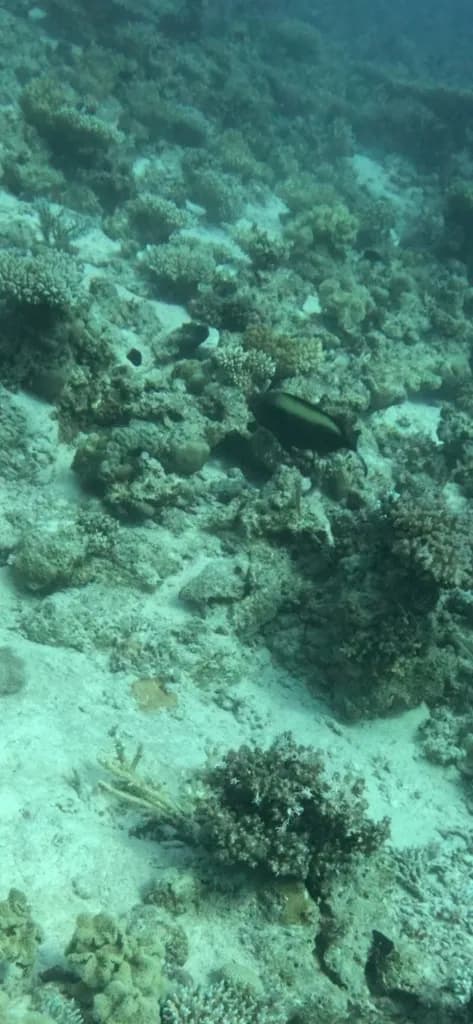
Fish · Least Concern
Bicolor Parrotfish
About
Big parrotfish; juveniles white with an orange band, adults green-scaled.
- Family
- Scaridae
- Avg size
- 60-80 cm
- Habitat
- The bicolor parrotfish is closely related to the spotted parrotfish (Cetoscarus ocellatus), which is also sometimes called the bicolour parrotfish; the two were once treated as a single species, the only one in the genus Cetoscarus, but they differ substantially in molecular and morphological terms. A coral-reef dweller, it typically occurs in lagoons and on seaward reefs at depths between 1 and 30 m (3 ft 3 in and 98 ft 5 in), with small juveniles favouring dense coral and algae-rich areas. Individuals have nonetheless been found as deep as 40 m, venturing into the large coral systems within their range.
- Behaviour
- As in other parrotfishes, males hold territories. All individuals begin life as female within a female-dominated society and change sex only as they mature, generally with age, a shift driven by social and environmental cues; the change is triggered when no male is present in the group. The bicolor parrotfish reaches sexual maturity at around three years old, and because of this pattern of alternative gonochorism the largest fish in a population tend to be male. This flexible breeding structure has notable biological value, allowing the population's reproduction to adjust as numbers change.
Where & when
Where & When to See It
Erg Somaya
occasionalYear RoundRas Abu Helal
occasionalYear RoundGota Abu Ramada
occasionalYear RoundBelina Wreck
occasionalYear RoundRas Disha
occasionalYear RoundBig Giftun
occasionalYear RoundBlue Hole - El Bells
occasionalYear RoundCareless Reef
occasionalYear RoundCarnatic
occasionalYear RoundChrisoula K
occasionalYear RoundSalem Express
occasionalYear RoundSha'ab Samadai (Dolphin House)
occasionalYear RoundSha'ab Sharm
occasionalYear RoundShaab Abu Nugar
occasionalYear RoundDunraven (Beacon Rock)
occasionalYear RoundShaab Eissa
occasionalYear RoundShaab El Erg
occasionalYear RoundShaab Eshta
occasionalYear RoundEel Gardens
occasionalYear RoundShaab Petra
occasionalYear RoundShaab Sabina
occasionalYear RoundEl Fanous West
occasionalYear RoundShabrur Um Gamar
occasionalYear RoundShark & Yolanda Reef
occasionalYear RoundElphinstone
occasionalYear RoundSiyul Kebira
occasionalYear RoundSmall Crack
occasionalYear RoundSmall Giftun
occasionalYear RoundErg Abu Ramada
occasionalYear RoundSoma Bay Garden
occasionalYear RoundErg Sabina
occasionalYear RoundThe Caves
occasionalYear RoundThe Islands
occasionalYear RoundNorth Gabr El Bint
occasionalYear RoundEl Erug
occasionalYear RoundTurft El Shahed
occasionalYear RoundFury Shoals
occasionalYear RoundTurtle Reef
occasionalYear RoundUmm Gamar North
occasionalYear RoundUmm Gamar South
occasionalYear RoundGiannis D
occasionalYear RoundSouth Ras Abu Galum
occasionalYear RoundEl Fanadir
occasionalYear RoundBanana Reef
occasionalYear RoundThe Canyon
occasionalYear RoundHabili Ali
occasionalYear RoundThree Pools
occasionalYear RoundHamda
occasionalYear RoundAbu Dabbab
occasionalYear RoundKimon M
occasionalYear RoundEl Mina Wreck
occasionalYear RoundLighthouse
occasionalYear RoundAbu Hashish
occasionalYear RoundAbu Kifan
occasionalYear RoundMoray Garden - Golden Blocks
occasionalYear RoundNapoleon Reef
occasionalYear RoundAbu Nuhas
occasionalYear RoundNorth Ras Abu Galum
occasionalYear RoundAbu Ramada North
occasionalYear RoundPanorama Reef
occasionalYear RoundAbu Ramada South
occasionalYear RoundShark Observatory
commonYear RoundDaedalus Reef
commonYear RoundJackfish Alley
commonYear RoundKormoran
commonYear RoundRas Nasrani
commonYear RoundThe Alternatives
commonYear RoundAbu Ghalawa
commonYear RoundAida
commonYear RoundAmphoras
commonYear RoundBig Brother Island
commonYear RoundEel Garden
commonYear RoundFar Garden
commonYear RoundFiddle Garden
commonYear RoundGordon Reef
commonYear RoundGota Kebir
commonYear RoundGota Soraya
commonYear RoundHabili Gaffar
commonYear RoundJackson Reef
commonYear RoundLaguna Reef
commonYear RoundLittle Brother Island
commonYear RoundMiddle Garden
commonYear RoundNear Garden
commonYear RoundNumidia
commonYear RoundParadise
commonYear RoundPinky Wall
commonYear RoundRas Bob
commonYear RoundRas Burg
commonYear RoundRas Ghamila
commonYear RoundRas Ghozlani
commonYear RoundRas Katy
commonYear RoundRas Um Sid
commonYear RoundRas Zaatar
commonYear RoundShaab Claudia
commonYear RoundShaab Maksur
commonYear RoundShaab Sataya
commonYear RoundShark's Bay
commonYear RoundSodfa
commonYear RoundTemple
commonYear RoundThomas Reef
commonYear RoundTower
commonYear RoundTurtle Bay
commonYear RoundUmm Kharalim
commonYear RoundWhite Knight
commonYear RoundWoodhouse Reef
commonYear Round