
Shark · Endangered
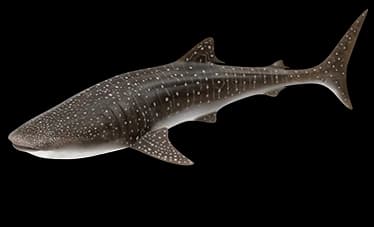
Whale Shark
About
The whale shark is a slow-moving, filter-feeding carpet shark and the largest fish alive today. The biggest reliably measured individual reached 18.8 m (61.7 ft), making it by far the largest living animal that is not a cetacean. It is the sole living species of the genus Rhincodon and the only surviving member of the family Rhincodontidae, within the subclass Elasmobranchii. Before 1984 it was placed in the genus Rhiniodon and the family Rhinodontidae.
- Family
- Rhincodontidae
- Avg size
- 800-1200 cm
- Habitat
- Whale sharks range through every tropical and warm-temperate sea. Mainly pelagic, they move through both coastal and open-ocean waters, and tracking studies show their use of habitat shifts dynamically, probably to follow prey. Off the northeast Yucatan Peninsula, individuals tend to swim near the surface inshore from sunrise into the early afternoon, then make repeated vertical dives in oceanic water through the afternoon and night.
- Behaviour
- For all their bulk, whale sharks are harmless to people, and younger animals are gentle enough to interact with divers. Underwater photographers have recorded them swimming alongside humans without incident. Even so, touching or riding them is banned and finable in most countries because it can cause the animals serious harm.
Where & when
Where & When to See It
Ras Abu Helal
occasionalMay–JulyAbu Dabbab
occasionalMay–JulyAbu Hashish
occasionalMay–JulyAbu Kifan
occasionalMay–JulyAbu Nuhas
occasionalMay–JulyAbu Ramada North
occasionalMay–JulyAbu Ramada South
occasionalMay–JulyAida
occasionalMay–JulyAmphoras
occasionalMay–JulyBanana Reef
occasionalMay–JulyBelina Wreck
occasionalMay–JulyBig Brother Island
occasionalMay–JulyBig Giftun
occasionalMay–JulyThomas Reef
occasionalMay–JulyThree Pools
occasionalMay–JulyTower
occasionalMay–JulyTurft El Shahed
occasionalMay–JulyTurtle Bay
occasionalMay–JulyTurtle Reef
occasionalMay–JulyUmm Gamar North
occasionalMay–JulyUmm Gamar South
occasionalMay–JulyWhite Knight
occasionalMay–JulyWoodhouse Reef
occasionalMay–JulyErg Somaya
occasionalMay–JulyPanorama Reef
occasionalMay–JulyBluff Point
occasionalMay–JulyCareless Reef
occasionalMay–JulyCarnatic
occasionalMay–JulyChrisoula K
occasionalMay–JulyDunraven (Beacon Rock)
occasionalMay–JulyEel Garden
occasionalMay–JulyEel Gardens
occasionalMay–JulyEl Erug
occasionalMay–JulyEl Fanadir
occasionalMay–JulyEl Fanous West
occasionalMay–JulyEl Mina Wreck
occasionalMay–JulyElphinstone
occasionalMay–JulyErg Abu Ramada
occasionalMay–JulyErg Sabina
occasionalMay–JulyFiddle Garden
occasionalMay–JulyFury Shoals
occasionalMay–JulyGiannis D
occasionalMay–JulyGordon Reef
occasionalMay–JulyGota Abu Ramada
occasionalMay–JulyHabili Ali
occasionalMay–JulyJackfish Alley
occasionalMay–JulyJackson Reef
occasionalMay–JulyKimon M
occasionalMay–JulyKormoran
occasionalMay–JulyLaguna Reef
occasionalMay–JulyLighthouse
occasionalMay–JulyMoray Garden - Golden Blocks
occasionalMay–JulyNapoleon Reef
occasionalMay–JulyNorth Gabr El Bint
occasionalMay–JulyNorth Ras Abu Galum
occasionalMay–JulyNumidia
occasionalMay–JulyParadise
occasionalMay–JulyPinky Wall
occasionalMay–JulyRas Burg
occasionalMay–JulyRas Disha
occasionalMay–JulyRas Ghamila
occasionalMay–JulyRas Ghozlani
occasionalMay–JulyRas Katy
occasionalMay–JulyRas Nasrani
occasionalMay–JulyRas Um Sid
occasionalMay–JulyRas Zaatar
occasionalMay–JulyRosalie Moller
occasionalMay–JulySalem Express
occasionalMay–JulySha'ab Samadai (Dolphin House)
occasionalMay–JulySha'ab Sharm
occasionalMay–JulyShaab Abu Nugar
occasionalMay–JulyShaab Eissa
occasionalMay–JulyShaab El Erg
occasionalMay–JulyShaab Eshta
occasionalMay–JulyShaab Petra
occasionalMay–JulyShaab Sabina
occasionalMay–JulyShabrur Um Gamar
occasionalMay–JulyShag Rock (Kingston)
occasionalMay–JulyShark & Yolanda Reef
occasionalMay–JulySiyul Kebira
occasionalMay–JulySmall Crack
occasionalMay–JulySmall Giftun
occasionalMay–JulySoma Bay Garden
occasionalMay–JulySouth Ras Abu Galum
occasionalMay–JulyTemple
occasionalMay–JulyThe Alternatives
occasionalMay–JulyThe Barge at Bluff Point
occasionalMay–JulyThe Canyon
occasionalMay–JulyThe Caves
occasionalMay–JulyThe Islands
occasionalMay–JulyThe Ulysses
occasionalMay–JulyThistlegorm
occasionalMay–JulyHamda
commonMay–JulyRas Bob
commonMay–JulyNear Garden
commonMay–JulyBlue Hole - El Bells
commonMay–JulyFar Garden
commonMay–JulyShaab Maksur
commonMay–JulySodfa
commonMay–JulyShark Observatory
commonMay–JulyLittle Brother Island
commonMay–JulyMiddle Garden
commonMay–JulyShark's Bay
commonMay–JulyDaedalus Reef